Building a Team Through Individual Growth
Creating an autonomous design team through tailored development, shared ownership, and trust.
Team development

Project Overview
Company: Chaos
Industry: 3D Visualization Software
Domain: AEC / Architectural Visualization
Timeline: 2026
My Role: Product Design Manager
Overview
I joined the organization as maternity cover for the manager of a two-person Product Design team dedicated to Enscape. Within my first month, a broader UX reorganization changed that setup completely.
One designer transitioned to another team, while two designers from different product areas joined mine. Instead of taking over an established team, I found myself leading a newly formed group of three designers with different levels of experience, strengths, product knowledge, and development needs.
My challenge was not to fix an underperforming team. It was to help three individual designers become a team while making sure each person had the autonomy, support, and opportunities they needed to grow.
The Challenge
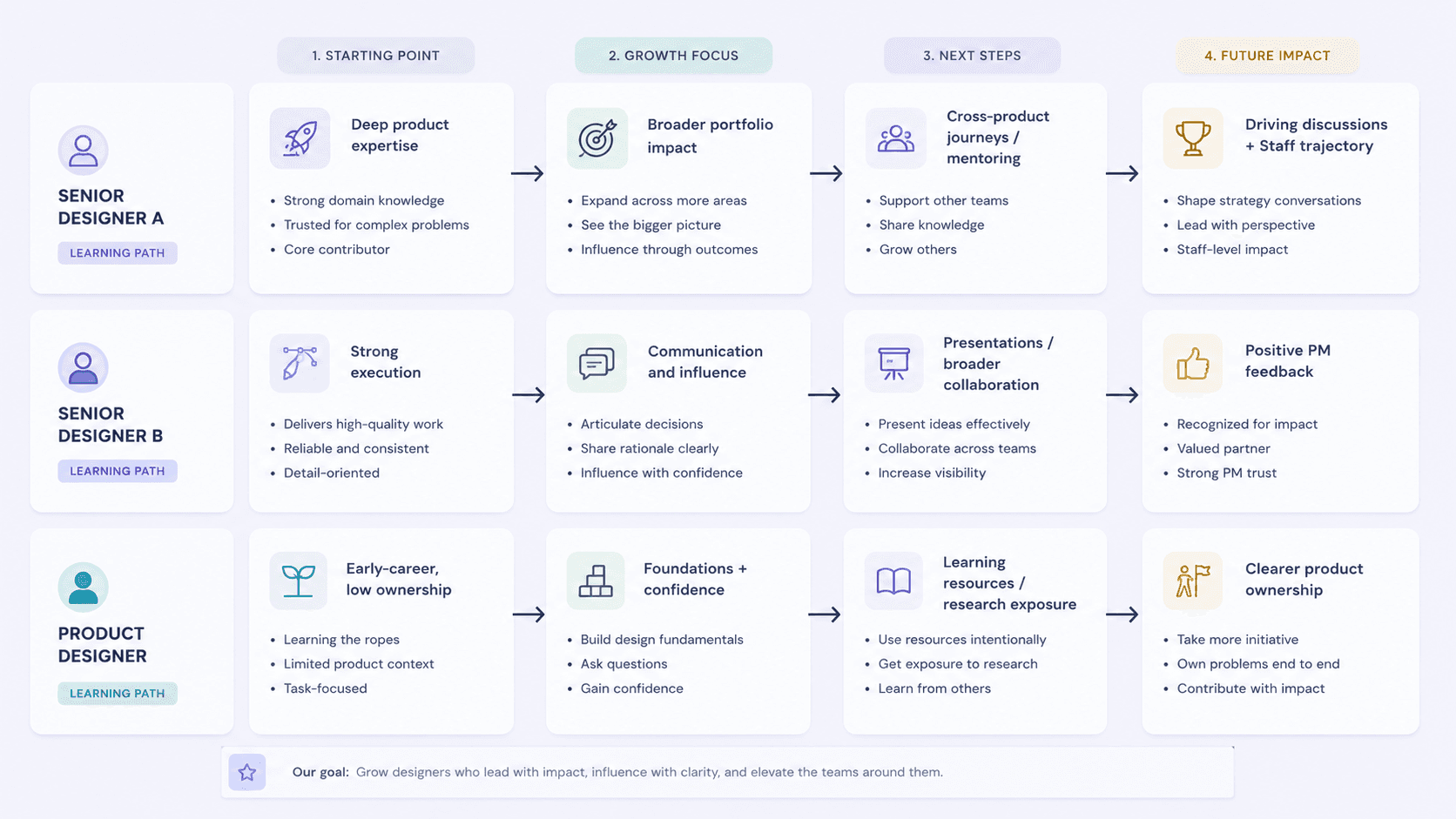
The three designers came into the team from very different starting points. One senior designer had deep expertise in a single product and strong potential for broader impact, but needed greater autonomy and exposure to portfolio-level challenges. Another senior designer was exceptionally strong and efficient in execution, but had an opportunity to strengthen communication, presentation, and collaboration beyond his established product relationships. The third designer was earlier in his career and had not yet developed clear ownership of a product area. He needed stronger design foundations, confidence, and opportunities to gradually operate more independently. At the same time, they had not previously worked together as a team. Their existing relationships with Product and Engineering were healthy, but their work was largely organized around individual product areas.
I needed to address two challenges in parallel:
How do I support three very different development paths?
And:
How do I create a shared sense of responsibility without removing individual ownership?
My Approach
Starting with the individual
Rather than introducing a standardized development plan, I spent my first month listening.
I used regular, in-depth 1:1s to understand each designer's aspirations, strengths, frustrations, confidence, and preferred career direction. I complemented those conversations with previous stakeholder feedback and my own observations as we began working together.
This helped me establish an important principle for the team:
Growth shouldn't look the same for everyone.
Together with each designer, I identified a development direction that built on their existing strengths while deliberately creating opportunities to stretch into new areas. We revisit these directions throughout our regular 1:1s and have more focused development conversations quarterly, adjusting goals and support as their needs evolve.
Turning product work into development opportunities
I didn't want individual development plans to become documents disconnected from everyday work. Where possible, I use actual roadmap opportunities to support each designer's growth.
Expanding from product to portfolio
For one of the senior designers, the goal was to broaden their impact beyond the product they knew deeply. I began involving them in cross-product conversations and deliberately looked for work around shared journeys and interaction patterns rather than isolated features. They now independently drive portfolio-level discussions, own cross-product experience topics, and has organically begun mentoring a less experienced designer on the team. Their growing impact and stakeholder recognition have become the foundation for our next development goal: progression toward a Staff Product Designer role focused on portfolio-level challenges.
Building confidence and ownership
For the less experienced designer, we focused first on strengthening core design skills and gradually increasing autonomy. I combined hands-on coaching during our 1:1s and project reviews with structured learning resources. Their background in psychology also gave us an opportunity to develop an existing interest in user research, so I connected them with a UX Researcher for additional mentorship and opportunities to participate in research activities.
Over time, they have moved from needing significant guidance to developing clear ownership of product areas and approaching their work with considerably greater confidence.
Growing influence beyond execution
The second senior designer already had very strong execution skills, so our development focus was different: communication, presentation, organization, and proactive collaboration.
I encouraged greater ownership not only of the design work itself, but also of communicating it to others and participating more actively in broader discussions.
Recent feedback from his Product counterpart specifically recognized his progress in communication, proactivity, and ownership of presenting his work — providing an external signal that the change was visible beyond the design team.
Creating the Team Around the Individuals
Individual development was only half of the challenge. Because the designers came from different product contexts, I wanted to prevent product ownership from turning into product silos. I established a lightweight operating rhythm with a clear purpose behind each touchpoint:
Cadence | Purpose |
|---|---|
Weekly 1:1s | Coaching, feedback, individual support and development |
Weekly team planning | Align priorities, share organizational context and surface blockers |
Biweekly design reviews | Create visibility across product areas and encourage shared critique |
Quarterly retrospectives | Reflect on team health and improve how we work together |
Quarterly development conversations | Review individual progress and adjust growth goals |
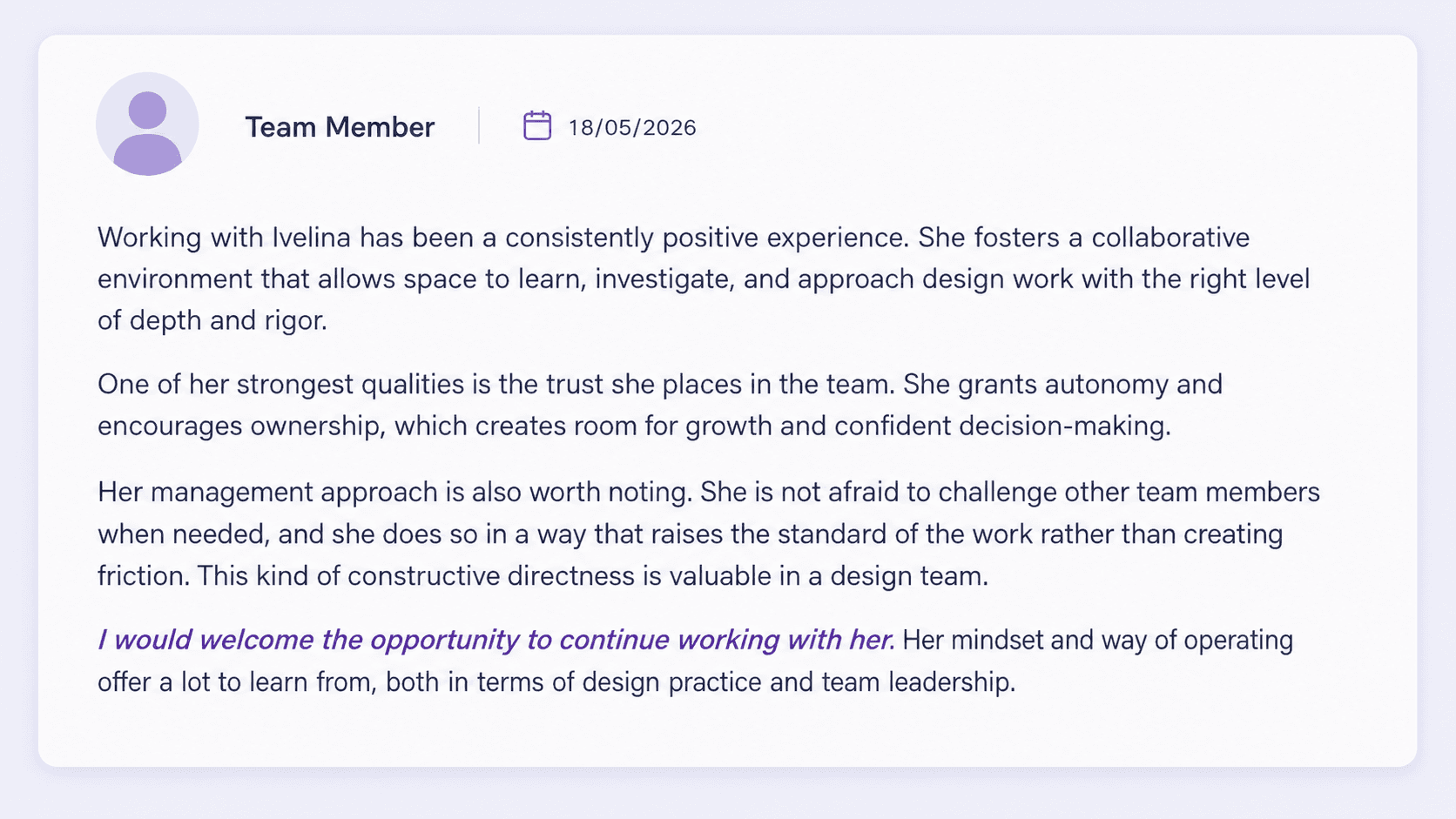
The biweekly design review became particularly important. While I review work with designers throughout the week, this dedicated session ensures that everyone understands what the rest of the team is solving, even when it sits outside their immediate product area. I also deliberately looked for overlapping problems where designers could work together. Initially, I often had to create those connections myself. Eventually, I didn't.
The Best Test Happened While I Wasn't There
One of the clearest signs of progress came during my vacation. Without me initiating or coordinating the work, the designers identified connections between their respective initiatives, began collaborating, and supported one another across their individual areas of ownership. The team continued moving effectively without depending on me to connect the dots.
For me, this was an important measure of healthy management. The goal was never to become the person through whom every decision or collaboration had to pass. It was to build enough trust, context, and shared responsibility that the team could operate independently.
What began as three designers working primarily within their own product contexts had started becoming a team that could recognize shared problems and act on them together.
Supporting Autonomy Also Means Knowing When to Step In
Giving designers autonomy does not mean leaving them alone when organizational dynamics become difficult. During an internal mentorship program, one designer found themselves unexpectedly pulled into a stakeholder conflict after an informal mentorship conversation was escalated beyond its original context.
In this situation, I shifted from coaching to advocacy.
I supported the designer privately, worked directly with the relevant stakeholders to resolve the misunderstanding, coordinated with HR, and helped them exit an unproductive mentorship arrangement without creating further conflict or damaging their existing working relationships.
It reinforced an important part of my management approach:
My role is to give people room to own their work and to recognize when they need their manager to create that room for them.
Outcomes
Within the first several months of working together, progress became visible at both the individual and team level.
Portfolio-level growth
A senior designer expanded from product-specific ownership into cross-product experience work, began independently driving broader discussions and mentoring another designer, and is now developing toward Staff-level responsibilities.
Greater confidence and autonomy
A developing designer established clearer product ownership, strengthened his foundations, gained exposure to research, and became increasingly independent in his work.
Stronger communication and influence
A senior designer received direct Product stakeholder recognition for improved communication, proactivity, and ownership of presenting their work.
Organic team collaboration
Designers increasingly identify overlaps, exchange feedback, and collaborate across initiatives without requiring me to orchestrate those interactions.
Shared responsibility without losing ownership
Each designer maintains clear responsibility for their work while developing awareness of and responsibility toward the broader product portfolio.
What I Learned
When I first moved into management, one of my concerns was that my natural preference for structure might translate into too much control. Instead, I've learned that the right structure can create autonomy rather than restrict it.
My job isn't to have every answer or make every decision for my designers. It's to understand what each person needs to grow, create opportunities that stretch them, give them enough context and trust to take ownership, and step in with direction or advocacy when they genuinely need it. Most importantly, I've learned that consistency in leadership doesn't mean managing everyone the same way.
The team works because each designer has space to develop differently while contributing to something larger than their individual product.